
Many people assume that doing more crunches and sit-ups is the fastest way to regain a flatter, stronger stomach after pregnancy. It sounds logical—if your abdominal muscles feel weak, surely exercising them directly will help.
However, when it comes to diastasis recti, traditional abdominal exercises can sometimes do more harm than good.
Diastasis recti is a common condition that many women experience during pregnancy and in the months following childbirth. It occurs when the abdominal muscles separate along the midline, creating a gap in the connective tissue that holds them together. While exercise can play an important role in recovery, not all exercises are suitable.
Understanding why certain movements may worsen the condition can help you make safer choices and support your body’s healing process.
What Is Diastasis Recti and Why Does It Happen?
Diastasis recti develops when the growing uterus stretches the abdominal wall during pregnancy. As the baby grows, pressure inside the abdomen increases, causing the left and right sides of the rectus abdominis muscles—the “six-pack” muscles—to move apart.
Hormonal changes also play a role. Pregnancy hormones help soften connective tissues to prepare the body for childbirth, but this can make the abdominal wall more vulnerable to stretching. How Pregnancy Affects Your Abdominal Muscles (Week by Week Guide)
A certain amount of muscle separation is completely normal during pregnancy, but for some women, the gap remains after their baby is born. For some women, it can persist for months or even years if not addressed appropriately.
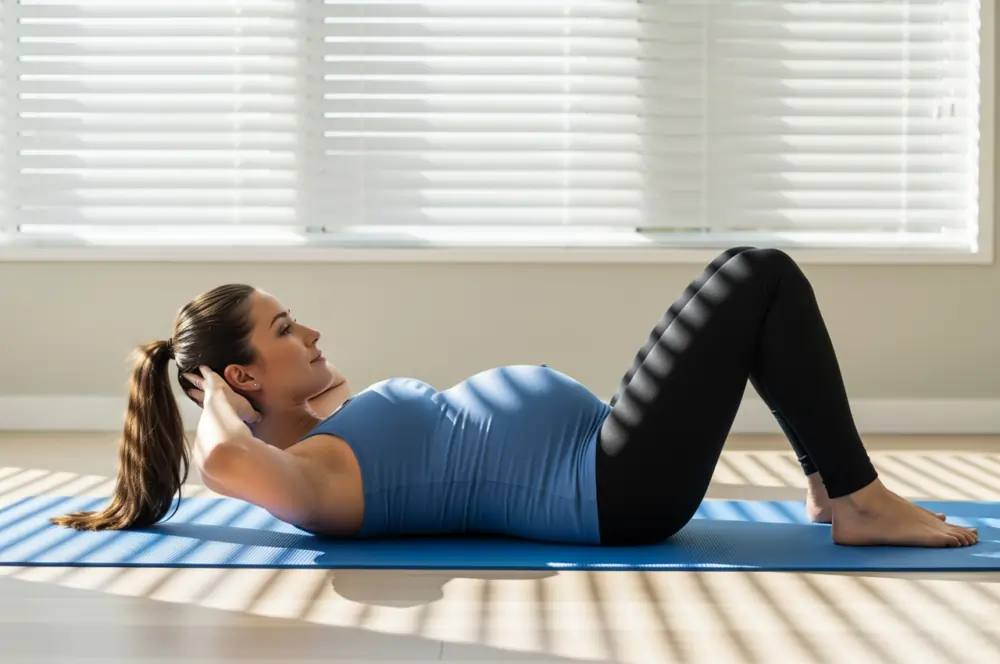
Why Traditional Crunches and Sit-Ups Increase Abdominal Pressure
Both crunches and sit-ups exert significant pressure on the abdominal cavity. You can perform the abdominal muscles in which you lift your head or shoulders, but go above the entire torso off the floor with a drastic contraction of this muscle.
This is pressure that a non-injured healthy abdominal wall can tolerate under no circumstances. But if the connective tissue between abdominal muscles has already been stretched or weakened, then added pressure pushes outward against the space.
Instead of helping the muscles come back together, the movement may place additional strain on the linea alba—the connective tissue running down the centre of the abdomen. Over time, this can make the separation more noticeable and more difficult to rehabilitate.
The “Doming” Effect: A Warning Sign You Shouldn’t Ignore
One of the clearest signs that an exercise may be unsuitable for diastasis recti is a phenomenon known as “doming” or “coning.”
This happens when the abdominal wall bulges outward along the midline during movement. It often resembles a ridge or dome running vertically down the stomach. LA-EMS Body Sculpting: Targeting Diastasis Effectively
When the abdominal pressure being generated is too high and pushing outward, this indicates that the abdominal muscles cannot withstand it anymore (doming). If you have seen this while doing crunches, sit-ups, planks, or any other exercise, it may indicate that your core is not yet prepared for this demand.
Ignoring this warning sign can place additional stress on already weakened tissues.
Other Exercises That May Aggravate Diastasis Recti
Crunches and sit-ups are not the only exercises that can increase pressure on the abdominal wall.
Full planks, bicycle crunches, leg raises, and heavy lifting (along with some high-impact activities) may also be included in the potential-excess-strain category based on your level of separation and whether you are fully recovered, as they can add pressure to areas weakened longer after a C-section.
Does that mean these exercises need to be avoided indefinitely? Instead, they might need to be altered or substituted for a little bit while the central reacclimates its muscles.
Why full assessment and progressions are so important: Not everyone will recover the same way.
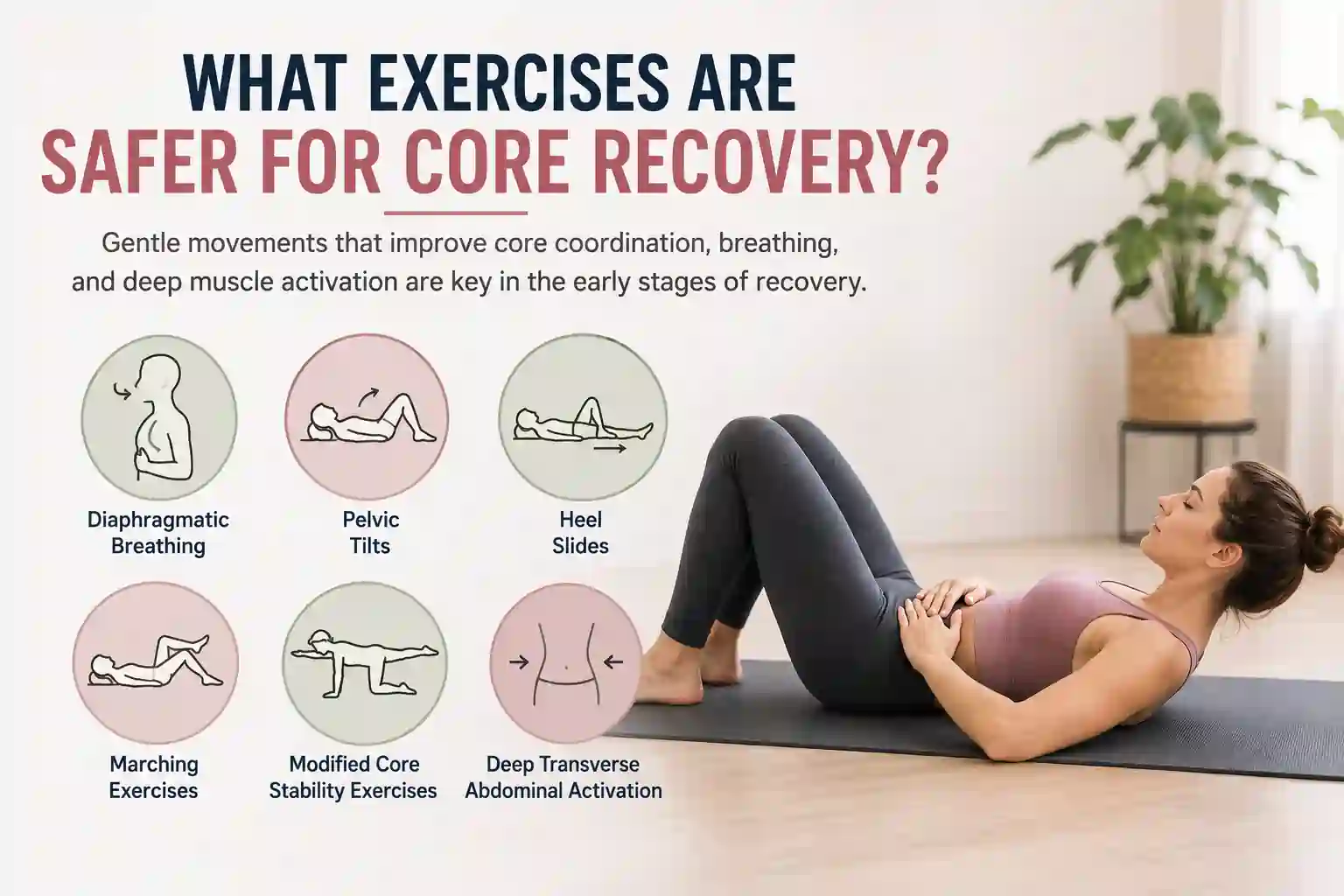
What Exercises Are Safer for Core Recovery?
The goal of diastasis recti rehabilitation is not simply to strengthen the abdominal muscles—it’s to improve the way the entire core system works together.
Breathing exercises, deep core activation, pelvic floor engagement, and more controlled movement tend to be most effective for those in the early stages of recovery.
Examples may include:
- Diaphragmatic breathing
- Pelvic tilts
- Heel slides
- Marching exercises
- Modified core stability exercises
- Deep transverse abdominal activation
These movements help develop functional strength while minimising unnecessary pressure on the abdominal wall.
Why Healing Diastasis Recti Is About More Than Appearance
Many women seek help for diastasis recti because they are concerned about the appearance of their stomach. While this is understandable, the condition can affect far more than aesthetics.
As your core starts to weaken, it may lead to:
- Lower back discomfort
- Poor posture
- Reduced core stability
- Pelvic floor dysfunction
- Difficulty lifting or carrying children
- Generally, feelings of weakness while doing daily activities
Fixing the condition properly can really enhance comfort, control, and overall physical function, not just the appearance of your abdominal area. 10 Things to Avoid During Pregnancy to Protect Your Core Muscles

When to Seek Professional Advice
If you suspect you have diastasis recti , or if you’ve been exercising without seeing improvement, it may be worth consulting a LA Lipo professional, women’s health physiotherapist, or postnatal rehabilitation specialist.
They can take a closer look at your abdominal muscles, assess how your body moves, and help you follow a recovery programme designed specifically for you.
The right guidance can help you rebuild strength safely and avoid exercises that may slow your progress.
Building Strength Without Making Diastasis Recti Worse
When you’re dealing with diastasis recti , doing more ab exercises isn’t always the answer. In fact, exercises like crunches and sit-ups can put extra pressure on your abdominal wall and strain tissues that are already stretched and weakened, which may make the separation worse.
Fortunately, recovery can actually be entirely free of repetitive ab sessions. But it is usually more sensible to focus on gentle movement, good breathing, and a gradual return to core strength.
Allowing your body the necessary time to recover and picking the right exercises can definitely go a long way toward how much more supported and stronger you ultimately feel as your core gets engaged.

Frequently Asked Questions
Q: Can doing crunches and sit-ups make diastasis recti worse, even if I am trying to strengthen my stomach muscles after pregnancy?
Yes. Crunches and sit-ups do make you push down through your abdomen, which adds even more pressure on the weakened connective tissue. This potentially makes the separation worse.
Q: How can I tell if an exercise is making my diastasis recti worse, and what warning signs should I look for during a workout?
Look for signs such as doming or bulging along the midline of your abdomen, discomfort, or a feeling of excessive strain during exercise. These may indicate that the movement is placing too much pressure on the abdominal wall.
Q: Why does my stomach still stick out after pregnancy, even though I am regularly doing sit-ups, crunches, and other abdominal exercises?
A persistent post-pregnancy belly can sometimes be linked to diastasis recti . Traditional abdominal exercises may not address the underlying separation and, in some cases, can make it harder to recover.
Q: Which exercises should I avoid if I have diastasis recti , and what are the safest ways to strengthen my core during recovery?
Exercises that produce excessive intra-abdominal pressure, such as sit-ups and crunches (or more advanced core exercises), probably should be avoided. Mild core and respiratory workouts are in most cases a more secure process to introduce while convalescing.
Q: Can untreated diastasis recti lead to problems such as back pain, poor posture, or weakness during everyday activities?
It can. An underdeveloped core can lead to poor posture, lower back pain, reduced stabilisation, and difficulties with daily activities like lifting/carrying.
Q: When should I seek professional help for diastasis recti , and how can a specialist support my recovery if exercise alone is not improving the condition?
If symptoms persist or you are unsure which exercises are safe, a qualified specialist can assess the separation and provide a tailored recovery plan to help rebuild core strength safely.
For Further Information, Please Call Us ON 03300 100 238